


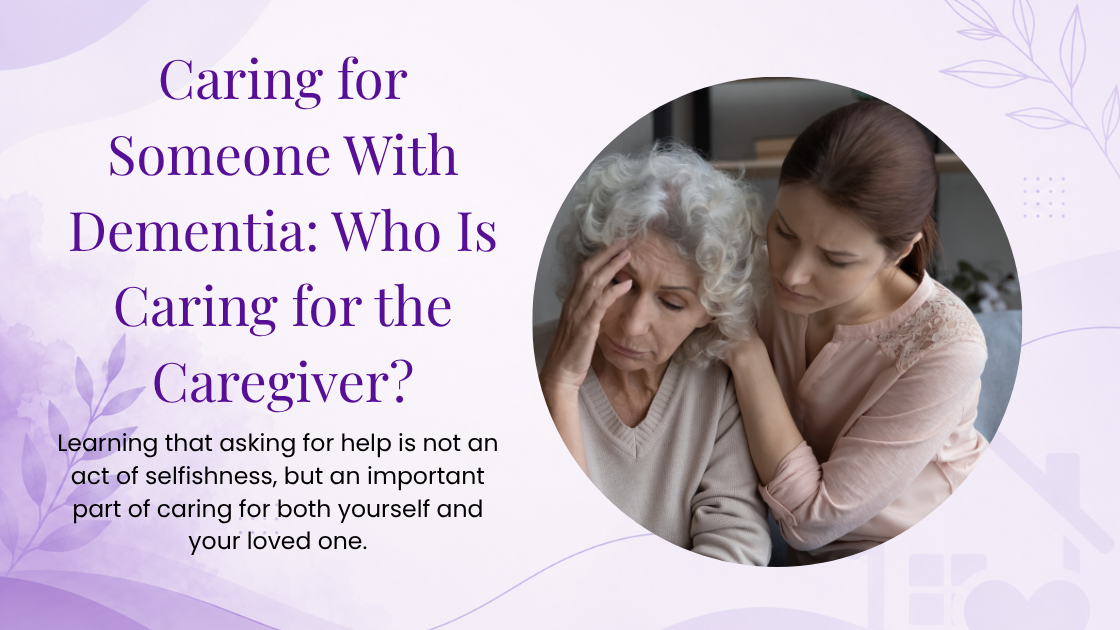
Caring for Someone With Dementia: Who Is Caring for the Caregiver?
When someone you love is living with dementia, the diagnosis rarely affects just one person.
Behind many individuals living with Alzheimer’s disease or another form of dementia is a spouse, daughter, son, sibling, friend, or other family member quietly rearranging their entire life to keep that person safe.
You may be managing medications, preparing meals, helping with bathing and dressing, answering the same question again and again, handling appointments, watching for wandering, paying bills, and trying to anticipate what might happen next.
And somewhere in the middle of caring for everyone else, you may have stopped taking care of yourself.
If that sounds familiar, you are far from alone.
The Hidden Workforce Behind Dementia Care
Family caregivers provide an extraordinary amount of dementia care in the United States.
According to the Alzheimer’s Association, 12.7 million family members and other unpaid caregivers provided approximately 19.6 billion hours of care to people living with Alzheimer’s or other dementias in 2025. That averages nearly 30 hours of unpaid care every week, per caregiver. The estimated economic value of that care was an astonishing $446.3 billion.
Here in Florida, the numbers hit especially close to home.
Approximately 877,000 family caregivers in Florida provide care to someone living with dementia, contributing about 1.4 billion hours of unpaid care. That care is valued at more than $30 billion.
Those numbers represent millions of very personal moments:
The daughter leaving work early because Mom is confused.
The husband waking up several times during the night because his wife is restless.
The son trying to raise his own children while also caring for his father.
The spouse who hasn’t had an uninterrupted afternoon to herself in months.
The caregiver sitting in the driveway for five extra minutes before going inside because it is the only quiet time they have had all day.
Caregiving is an act of love. But love does not make someone immune to exhaustion.
When someone you love is living with dementia Caregiving Is Different
Caring for someone with dementia can be especially challenging because the person you are caring for is continually changing.
Someone who was independent six months ago may suddenly need help getting dressed. A loved one who once enjoyed going out may become anxious in unfamiliar surroundings. Personality changes, confusion, repetitive questions, wandering, sleep disruption, agitation, and difficulty communicating can gradually increase the caregiver’s responsibilities.
And unlike many illnesses, dementia caregiving can continue for years.
The CDC reports that family and friends provide most dementia care and that many caregivers remain in the caregiving role for several years. Dementia caregivers are also at greater risk of anxiety, depression, and poorer quality of life than many other caregivers.
The emotional toll is significant.
The Alzheimer’s Association reports that 59% of dementia caregivers describe their emotional stress as high or very high, while 38% report high levels of physical stress related to caregiving.
Those statistics matter because caregiver burnout does not always announce itself.
Sometimes it simply looks like being tired all the time.
Signs You May Be Carrying Too Much
You may tell yourself:
“I’m fine.”
“She’s my mother. This is what I’m supposed to do.”
“Nobody can care for him the way I can.”
“I’ll get some rest later.”
“I can handle it.”
And maybe you can handle it.
The better question is: At what cost?
Caregiver stress may show up as constant exhaustion, irritability, difficulty sleeping, anxiety, withdrawing from friends, missing your own medical appointments, losing interest in things you once enjoyed, or feeling guilty whenever you take time for yourself.
For working caregivers, the pressure can extend into their careers. Previous Alzheimer’s Association data found that many employed dementia caregivers have had to arrive late, leave early, take time off, or even take a leave of absence because of their caregiving responsibilities.
Caregiving can begin to affect your relationships, finances, career, physical health, and emotional well-being without you realizing how much has changed.
The Guilt of Asking for Help
One of the hardest parts of dementia caregiving can be allowing someone else to help.
Family caregivers often feel guilty.
“I promised I would take care of her.”
“He doesn’t want a stranger in the house.”
“What if something happens when I’m gone?”
“I should be able to do this myself.”
But accepting help does not mean you are giving up your role as a caregiver.
It can actually help you continue in that role.
Professional dementia care does not have to replace family care. It can support it.
Having a trained caregiver spend a few hours with your loved one may give you time to attend your own doctor’s appointment, go to work, have dinner with your spouse, spend time with your children, exercise, run errands, or simply sit somewhere quietly and breathe.
You do not have to wait until you are completely overwhelmed before asking for help.
You Are Still Their Daughter, Son, Husband, Wife, or Friend
Dementia has a way of changing relationships.
A daughter gradually becomes a scheduler, medication reminder, driver, cook, advocate, and personal care assistant.
A husband becomes responsible for almost every household decision.
A son begins parenting the same person who once cared for him.
Eventually, caregiving responsibilities can become so consuming that the relationship itself gets buried underneath the tasks.
Sometimes receiving help allows you to step out of the caregiver role for a little while and simply be their family again.
You can sit beside your mother instead of constantly cleaning the kitchen.
You can watch a movie with your husband instead of worrying about everything that needs to be done.
You can visit Dad without spending the entire afternoon completing his household tasks.
Those moments matter.
Caring for Yourself Is Part of Caring for Them
Your loved one needs you.
But they do not need you exhausted, depleted, isolated, and trying to do the work of several people alone.
Consider building small forms of support into your routine:
- Let trusted family members take specific responsibilities instead of simply telling them you are “fine.”
- Learn as much as you can about dementia so changes in behavior feel less frightening or personal.
- Stay connected to friends, family, caregiver groups, and professionals who understand what you are experiencing.
- Protect your own medical appointments, sleep, nutrition, movement, and mental health.
- Consider professional respite or home care before you reach a crisis point.
You deserve support too.
How Bless Her Heart Home Care Can Help
At Bless Her Heart Home Care, we understand that dementia care is not only about supporting the person living with dementia.
It is about supporting the entire family.
Our management team is dementia-certified, and our caregivers receive training focused on caring for individuals living with dementia. Our goal is not simply to “watch” your loved one. We focus on providing compassionate, individualized support that promotes safety, engagement, dignity, routine, and quality of life.
Depending on your family’s needs, we can assist with companionship, personal care, meal preparation, homemaking, supervision, daily routines, respite for family caregivers, and other non-medical support in the comfort of home.
Whether you need a few hours to recharge or more consistent support as your loved one’s needs progress, you don’t have to wait until caregiving becomes unmanageable to explore your options.
And some families may qualify for opportunities that can help them access dementia care or respite services at little or no cost. Our team can help you understand what options may be available.
Before You Say, “I’m Fine” One More Time…
Ask yourself:
When was the last time you had a full day to yourself?
When was the last time you slept without worrying?
When was the last time you did something simply because you enjoyed it?
When was the last time someone asked you how you were doing—and you answered honestly?
You love the person you are caring for.
You can love them deeply and still need help.
Those two things can be true at the same time.
At Bless Her Heart Home Care, we’re here to care for your loved one—and to give you the opportunity to simply be their family again.
Serving families throughout Florida’s Treasure Coast.
Contact Bless Her Heart Home Care to learn more about our dementia care services and how we can support your family.