


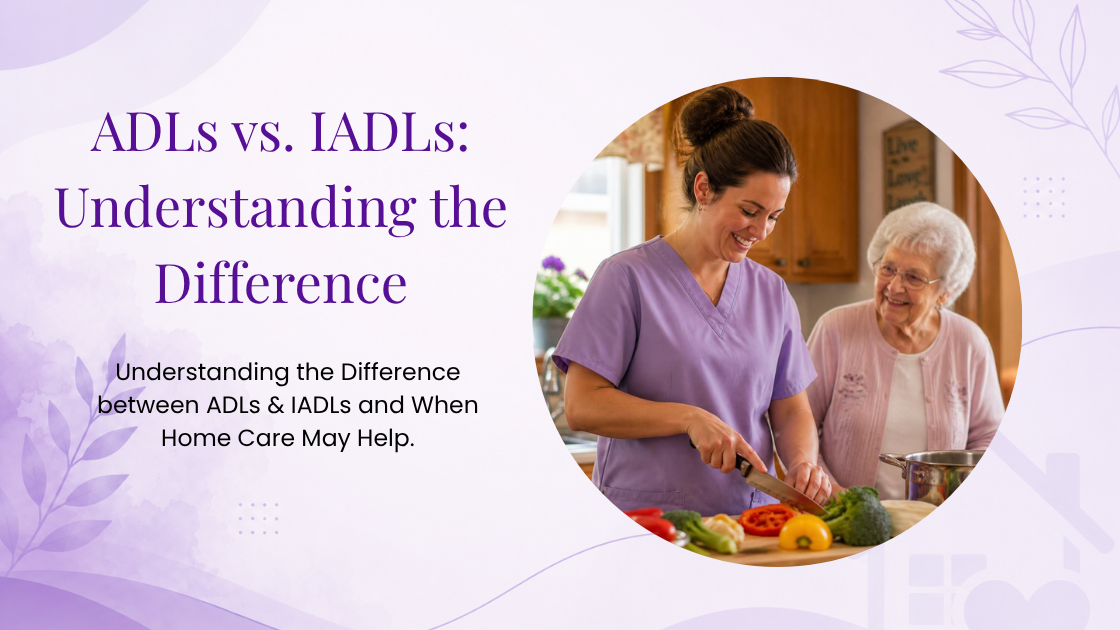
ADLs vs. IADLs: Understanding the Difference
When families begin exploring in-home care for a senior loved one, they may hear terms like Activities of Daily Living and Instrumental Activities of Daily Living from healthcare professionals, care managers, or home care providers.
But what do these terms actually mean?
ADLs and IADLs are two ways of looking at how well a person is able to manage everyday life. Understanding the difference can help families recognize changes in their loved one’s abilities and determine when additional support at home may be helpful.
While ADLs focus primarily on basic self-care, IADLs involve the more complex tasks required to live independently.
Let’s take a closer look.
What Are ADLs?
ADL stands for Activities of Daily Living.
These are the basic tasks people typically need to perform every day to care for themselves. When someone begins having difficulty with ADLs, it may be a sign that they need additional assistance with personal care at home.
Common ADLs include:
- Bathing: Getting in and out of the shower or tub and washing oneself
- Dressing: Selecting and putting on appropriate clothing
- Toileting: Getting to and using the bathroom safely
- Eating: Feeding oneself
- Transferring: Moving safely from one position to another, such as from a bed to a chair
- Personal hygiene: Grooming, brushing teeth, shaving, and other basic hygiene tasks
Difficulty with these activities can be especially important because they may affect a person’s safety, dignity, and ability to remain independent at home.
What Might ADL Difficulties Look Like?
Changes can sometimes be subtle.
You may notice that your loved one:
- Is afraid to shower without someone nearby
- Has difficulty putting on clothing
- Needs help getting in or out of bed
- Struggles to safely use the bathroom
- Has difficulty standing long enough to prepare for the day
- Is no longer maintaining their usual grooming routine
These changes don’t necessarily mean someone can no longer live at home. They may simply indicate that additional support could make aging in place safer and more manageable.
What Are IADLs?
IADL stands for Instrumental Activities of Daily Living.
These are the more complex activities that allow someone to successfully manage their household and live independently in the community.
IADLs generally require more planning, organization, decision-making, and problem-solving than basic ADLs.
Common IADLs include:
- Meal planning and preparation
- Grocery shopping
- Managing medications
- Managing finances and paying bills
- Housekeeping and laundry
- Transportation and driving
- Using the telephone or other communication devices
- Managing appointments and schedules
Someone may still be completely independent with their basic personal care but begin struggling with IADLs.
This can be one of the earliest signs that a senior may benefit from additional support.
Activities of Daily Living vs Instrumental Activities of Daily Living
The easiest way to remember the difference is:
ADLs = Taking care of yourself.
IADLs = Managing your life and household.
For example, someone may be perfectly capable of showering, dressing, and eating independently but may no longer be able to safely manage their medications, prepare meals, drive to appointments, or keep up with household responsibilities.
That person may still appear very independent to friends and family, but changes in IADLs can indicate that some support would be beneficial.
| ADLs | IADLs |
|---|---|
| Bathing | Meal preparation |
| Dressing | Grocery shopping |
| Toileting | Medication management |
| Eating | Managing finances |
| Transferring | Transportation |
| Personal hygiene | Housekeeping |
| Grooming | Laundry |
| Managing appointments |
Why ADLs and IADLs Matter When Considering Home Care
Understanding ADLs and IADLs can help families recognize when to consider in-home care.
A senior doesn’t necessarily need to struggle with every task before receiving assistance.
In fact, waiting until someone can no longer perform basic ADLs can mean waiting until a situation has already become unsafe.
Sometimes, providing assistance with IADLs earlier can help prevent bigger problems later.
For example, a caregiver who helps with grocery shopping, meal preparation, light housekeeping, and transportation may help an older adult remain independent at home while reducing some of the everyday challenges that have become difficult.
How Changes in ADLs and IADLs Can Signal a Need for Support
Families should pay attention to changes rather than focusing only on whether their loved one can complete a task at all.
Ask yourself:
Are they doing things differently than they used to?
Perhaps your loved one is still showering independently but has started avoiding showers because they are afraid of falling.
Maybe they can still prepare meals but are eating the same foods repeatedly because grocery shopping has become difficult.
Or perhaps they are taking their medications but occasionally forgetting whether they already took them.
These changes may be worth discussing with a healthcare professional and may indicate that senior care at home could be beneficial.
Activities of Daily Living and Instrumental Activities of Daily Living in Dementia Care
Changes in IADLs are often particularly noticeable in individuals experiencing memory loss or early-stage dementia.
Someone may continue to dress and bathe independently while beginning to struggle with:
- Paying bills
- Managing medications
- Preparing meals
- Driving
- Remembering appointments
- Shopping
- Following familiar routines
As dementia progresses, difficulties may eventually affect ADLs as well.
Early dementia home care can provide companionship, structure, reminders, supervision, and assistance with daily routines while allowing individuals to remain in familiar surroundings.
How Bless Her Heart Home Care Can Help
At Bless Her Heart Home Care, we understand that every family’s situation is different. Some clients may need assistance with basic activities of daily living, while others simply need help with the instrumental tasks that have become more difficult.
Our caregivers can provide support with many everyday needs, including:
Personal Care
Assistance with bathing, dressing, grooming, toileting, and other personal care routines can help seniors maintain their dignity while staying safe at home.
Meal Preparation
Caregivers can assist with meal preparation, grocery shopping, and encouraging proper hydration and nutrition.
Light Housekeeping
Laundry, dishes, changing linens, and maintaining commonly used areas can make the home more comfortable and reduce potential safety hazards.
Transportation
Caregivers can provide transportation and accompaniment for doctor’s appointments, errands, shopping, and other activities.
Companionship
Sometimes the greatest need isn’t physical assistance. Having a trusted caregiver available for conversation, walks, hobbies, or social activities can help reduce isolation and support quality of life.
Dementia Support
For individuals experiencing memory changes, caregivers can provide companionship, structure, reminders, and supervision while helping maintain familiar routines.
Respite Care
Family caregivers need support too. Temporary or regularly scheduled respite care allows family members to rest, attend appointments, travel, or simply take a much-needed break.
You Don’t Have to Wait for a Crisis
One of the biggest misconceptions about in-home care for seniors is that someone has to be completely dependent before they can benefit from a caregiver.
That’s simply not the case.
Home care can be introduced gradually based on what a person actually needs. A senior may start with a few hours of assistance each week and increase care as their needs change.
The goal isn’t to take away independence.
The goal is to provide just enough support to help preserve it.
If you’re noticing changes in your loved one’s ability to manage Activities of Daily Living or Instrumental Activities of Daily Living, it may be time to have a conversation about additional support.
Helping Seniors Live Safely and Independently at Home
At Bless Her Heart Home Care, we provide personalized in-home care services throughout the Treasure Coast. Our goal is to meet families where they are and provide compassionate support that fits their individual needs.
Whether your loved one needs help with personal care, household tasks, transportation, companionship, dementia support, or respite care, we’re here to help you understand your options.
You don’t have to wait until a crisis to ask for help.
Contact Bless Her Heart Home Care today to learn how the right level of support can help your loved one remain safe, comfortable, and independent at home.