


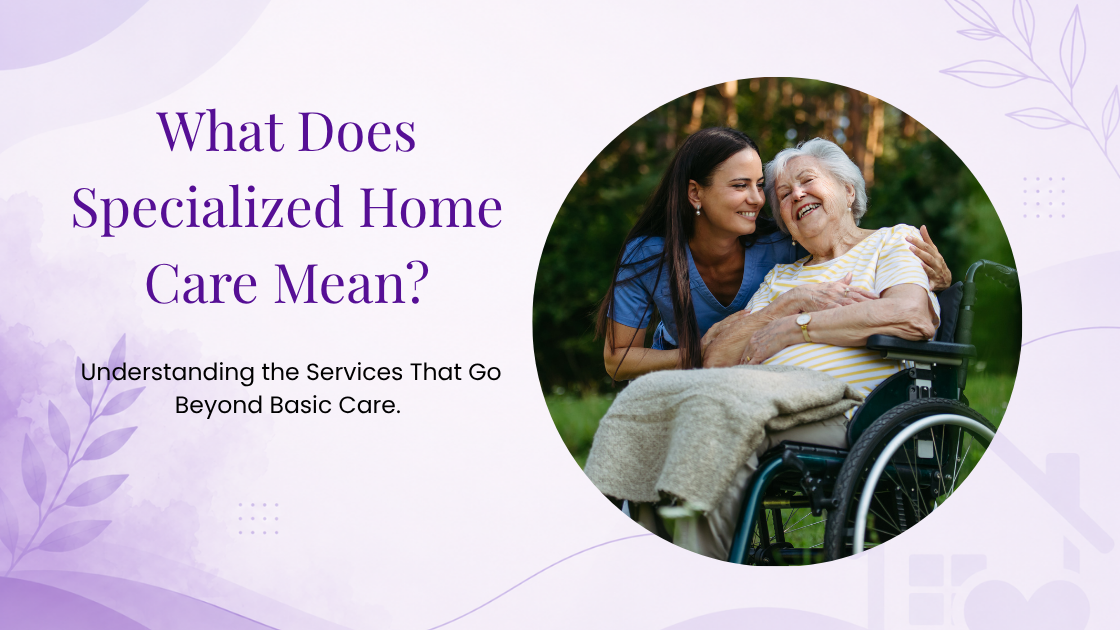
Understanding the Services That Go Beyond Basic Care
When families first begin looking into home care, they often hear the term specialized home care. But what exactly does that mean?
Unlike traditional companion or personal care, specialized home care is designed for individuals who have unique health challenges, are recovering from surgery, or need extra support due to cognitive changes or safety concerns. These services provide personalized assistance that helps clients remain safe, comfortable, and independent in their own homes.
At Bless Her Heart Home Care, we understand that every person’s needs are different. That’s why our caregivers receive additional training and work closely with families to provide care tailored to each individual’s situation.
Here’s what specialized home care can include.
Dementia & Alzheimer’s Care
Caring for someone living with Alzheimer’s disease or another form of dementia requires patience, consistency, and specialized knowledge.
Memory loss affects much more than forgetfulness. It can impact communication, daily routines, judgment, mobility, and emotional well-being. As dementia progresses, everyday tasks that once seemed simple may become overwhelming.
Our caregivers are trained to provide compassionate support while helping clients maintain as much independence as possible.
Specialized dementia care may include:
- Medication reminders
- Assistance with bathing and dressing
- Meal preparation
- Cognitive engagement activities
- Establishing consistent daily routines
- Fall prevention
- Wandering prevention strategies
- Companionship and emotional support
- Family respite care
Our goal is to reduce anxiety, create structure, and help individuals feel safe in familiar surroundings.
Home Safety Assessments
Many falls and accidents happen because of hazards that often go unnoticed.
A professional home safety assessment helps identify risks before they become emergencies. Small changes throughout the home can dramatically improve safety while allowing seniors to remain independent longer.
During a home safety assessment, we evaluate areas such as:
- Loose rugs
- Poor lighting
- Bathroom safety
- Stairways and handrails
- Trip hazards
- Bedroom accessibility
- Kitchen organization
- Emergency preparedness
- Mobility throughout the home
Recommendations may include grab bars, improved lighting, assistive devices, rearranging furniture, or other modifications that make daily living safer and easier.
Preventing falls is often far easier and far less costly than recovering from one.
Pre-Surgery & Post-Surgery Assistance
Preparing for surgery doesn’t start on the day of the procedure, and recovery doesn’t end when you leave the hospital.
Many individuals need temporary assistance before and after surgery to help ensure a smooth recovery at home.
Pre-surgery support can include:
- Preparing meals
- Grocery shopping
- Organizing the home for recovery
- Transportation planning
- Medication organization
After surgery, caregivers can assist with:
- Mobility assistance
- Personal hygiene
- Meal preparation
- Medication reminders
- Transportation to follow-up appointments
- Light housekeeping
- Monitoring for changes that should be reported to family or healthcare providers
Whether recovering from joint replacement, cardiac surgery, orthopedic procedures, or another operation, having support at home can reduce stress and promote healing.
Transitional Care
The period after leaving the hospital is often one of the most vulnerable times for older adults.
Transitional care focuses on helping individuals safely move from a hospital, rehabilitation center, or skilled nursing facility back to their home.
Without proper support, many seniors experience medication confusion, missed appointments, poor nutrition, or falls that can lead to hospital readmission.
Our caregivers help bridge that gap by providing:
- Medication reminders
- Assistance following discharge instructions
- Transportation to follow-up appointments
- Meal preparation
- Personal care assistance
- Home safety monitoring
- Communication with family members
- Daily routine support
The goal is to promote a safe recovery while reducing the risk of complications or unnecessary hospital visits.
Who Can Benefit From Specialized Home Care?
Specialized home care may be appropriate for individuals who:
- Have Alzheimer’s disease or another dementia diagnosis
- Are recovering from surgery
- Recently returned home from a hospital or rehabilitation facility
- Have experienced falls or have mobility concerns
- Need temporary or long-term assistance
- Want to remain safely at home while receiving personalized support
Because every situation is unique, care plans are customized to each client’s individual needs.
Why Families Choose Specialized Home Care
Families often feel overwhelmed when a loved one’s needs become more complex.
Specialized home care offers peace of mind by providing trained caregivers who understand the challenges associated with memory loss, recovery, mobility limitations, and changing health conditions.
Benefits include:
- One-on-one personalized attention
- Greater independence at home
- Improved safety
- Reduced caregiver stress
- Flexible schedules
- Better quality of life
- Support tailored to changing needs
Most importantly, specialized care helps individuals remain where they are most comfortable, their own home.
Let Bless Her Heart Home Care Help
Whether your loved one is living with dementia, preparing for surgery, recovering after a hospital stay, or simply needs additional support to remain safe at home, our compassionate caregivers are here to help.
At Bless Her Heart Home Care, we create personalized care plans that provide the right level of support while promoting dignity, comfort, and independence.
If you’re unsure which type of specialized care is right for your family, we’re happy to answer your questions and help you explore your options.
Contact us today to learn how our specialized home care services can support your loved one.